
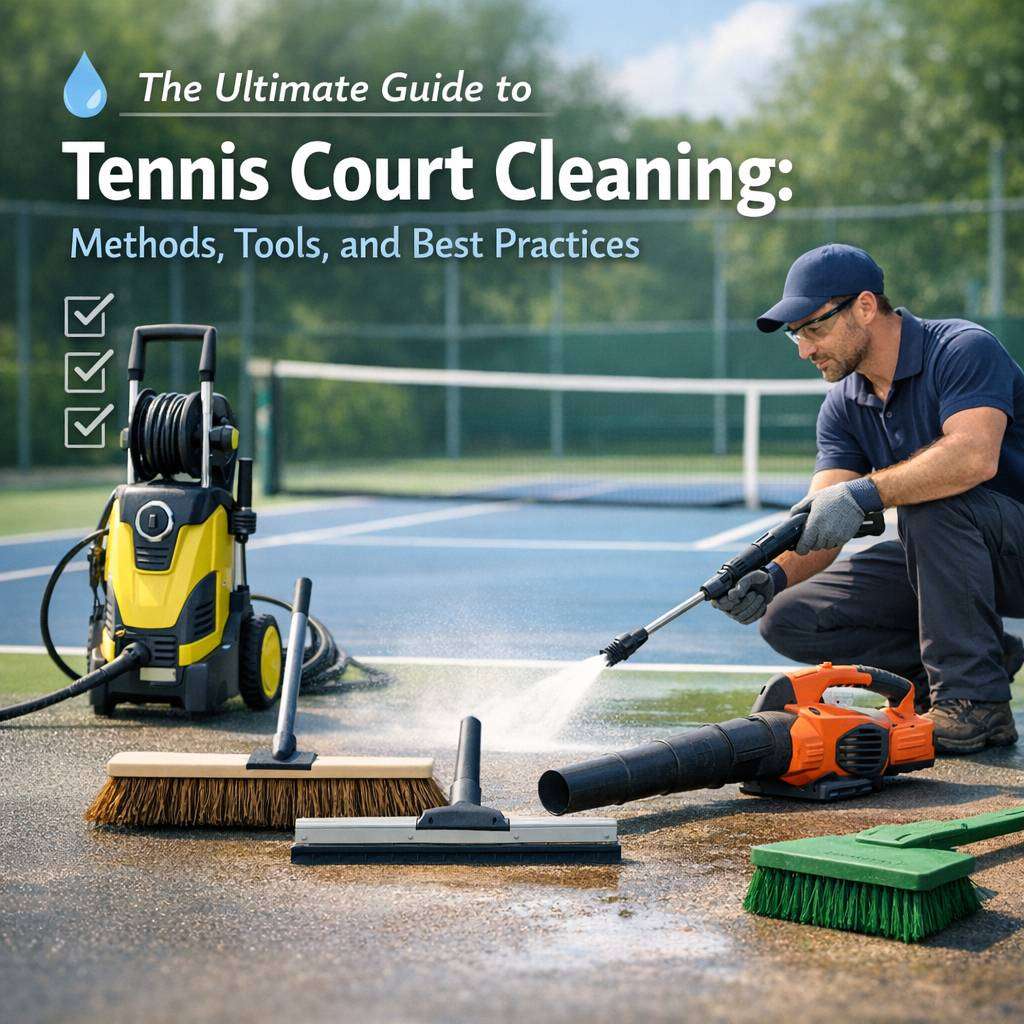
Tennis court cleaning is essential for safety and play quality, protecting surfaces from mold, debris, and slick spots. Regular maintenance extends court life and preserves ball bounce. For efficient cleaning, consider water broom methods. https://www.10-s.com/products/hard-court-supplies/water-brooms Proper tools and routine care make inspection quick and effective.
Maintaining a pristine tennis court requires regular cleaning and preventive care. Tennis court cleaning removes debris, algae, and stains, prolonging surface life and improving playability. For expert guidance and services, visit https://www.artificialgrassmaintenance.co.uk to discover trusted solutions and professional maintenance options. Your court stays safe and inviting.
Tennis court cleaning is essential to preserve surface quality and player safety. Regular debris removal, pressure washing, and specialized surface treatment keep courts pristine and slip-resistant. For professional guidance, visit https://www.sspmaintenance.co.uk/artificial-clay-tennis-courts to learn about effective maintenance solutions. Proper cleaning reduces wear, extends lifespan, and enhances performance on artificial clay surfaces.
Tennis court cleaning is essential for preserving surface integrity and player safety. Regular debris removal, power washing, and surface sealing extend the life of courts while preserving traction and color. A proactive maintenance routine reduces costly repairs and downtime. For trusted services, consider options that specify meticulous attention to courts and coatings. https://www.northamericanec.com/tennis-courts
Tennis court cleaning is an essential component of tennis court maintenance, ensuring optimal playability, safety, and longevity of the surface. Whether you are overseeing a tennis grass court, artificial grass, or a hard surface, a systematic approach to cleaning can prevent material degradation, colour fading, and unsafe debris accumulation. This guide presents expert guidance on the methods, tools, and best practices to keep your court pristine and ready for the baseline and service lines.
Why effective cleaning mattersRegular cleaning helps manage debris such as leaves, seeds, grit, and biological growth. For outdoor installations, weather exposure accelerates wear, while indoor venues may still experience dust and mould in poorly ventilated areas. Consistent cleaning supports even wear patterns, reduces patching and repair needs, and extends tennis court maintenance intervals. For tennis grass court maintenance and artificial grass tennis surfaces, removing organic matter is crucial to prevent mould, drainage blockages, and root zone decay.
Initial assessment and planningBegin with a surface inspection to identify wear zones, drainage issues, and any embedded materials that require targeted removal. Map out high-traffic lines and potential trouble spots such as corners, doubles alleys, and baselines. Consider the court type—whether it is tennis court installation on a clay, grass, or acrylic base—as the cleaning approach and frequency will differ accordingly. Establish a cleaning schedule aligned with seasonal conditions, weather forecasts, and usage levels, and ensure staff are trained in appropriate safety procedures and PPE.
Cleaning methods by surface typeTennis court cleaning must be tailored to the surface. For artificial grass tennis, or artificial grass surfaces used in tennis courts, routine brushing and debris removal maintain pile uprightness and drainage. A gentle power brushing or mechanical broom can lift litter from the fibres without damaging the backing. Periodic power washing at low pressure may be warranted to remove ground-in dirt, but never use high-pressure jets that can dislodge fibres or degrade the turf.
Tennis grass court maintenance requires attention to moisture management and vegetative growth control. Regular raking helps keep the grass upright and prevents scorch from sun exposure or shading. When moss or algae become visible, apply approved cleaners suitable for turf without harming the grass roots and underlying drainage layers. Enlist a professional for any chemical treatments to ensure compatibility with the grass species and to comply with environmental regulations.
For hard courts and acrylic surfaces, cleaning focuses on solid debris removal, infiltration management, and surface protection. Sweep the court with a stiff-bristle broom to dislodge dirt and small stones, then wash with a mild, court-safe cleaning solution. Rinse thoroughly to prevent slippery residues. Pay particular attention to line markings, which should be kept clear and well defined for accurate ball placement and player safety.
For clay or stucco-based courts, monitor moisture content and avoid washing that could cause erosion or surface damage. Remove loose material with a soft broom and perform selective spot-cleaning where necessary. For resurfacing or significant repairs, consult specialists in tennis court resurfacing to ensure that the renewing layer provides consistent grip and bounce characteristics.
Tools and equipment for effective cleaningA well-equipped toolkit optimises tennis court cleaning. A robust, weather-resistant broom or drag broom is essential for initial debris removal, followed by a deck brush or stiff-bristle brush for embedded dirt. A leaf blower can expedite large-area debris collection but should be used with care to avoid dispersing dust into adjacent properties or courts. For artificial grass, a motorised brush or side-to-side roller helps maintain pile alignment and drainage. A low-pressure washer is a beneficial addition for hard surfaces, but always check manufacturer guidance to avoid surface damage. A squeegee or wet-dry vacuum aids in moisture control, particularly around drainage channels and corners. For maintenance of tennis grass court or artificial grass surfaces, consider a specialised turf rake to lift and align fibres after cleaning.
Best practices for tennis court installation and ongoing maintenanceDuring tennis court installation, select high-quality materials designed for the specific climate and usage level. Ensure proper sub-base preparation and drainage to minimise standing water and surface deformation, which can complicate cleaning and shorten the court’s life. When new installations are in place, implement a conditioning programme that includes initial edge and line protection, followed by a period of gentle cleaning to avoid disturbing newly laid surfaces.
Ongoing tennis court maintenance includes seasonal inspections and proactive cleaning. In summer, clear organic matter promptly to prevent heat-related damage and discourage weed growth. In autumn and winter, manage leaf litter and damp conditions to reduce slip hazards and moss formation. For tennis court repairs, address cracks, joint separations, or seam failures promptly to preserve surface integrity and cleaning effectiveness. If resurfacing is required, plan the process in consultation with skilled contractors who specialise in tennis court resurfacing to guarantee compatibility with the existing structure and intended playing characteristics.
Surface-specific maintenance considerationsArtificial grass tennis surfaces demand regular profiling and grit-free cleaning to protect drainage. For tennis court artificial grass, ensure the infill material remains evenly distributed and the grass fibres remain upright for optimal ball bounce. When adopting tennis court maintenance routines, avoid aggressive chemicals that can degrade the synthetic fibres or backing. For tennis grass court maintenance, monitor thatch levels and mower settings align with the grass species to prevent scalping and wear.
Environmental and safety considerationsAlways follow local regulations regarding chemical usage and disposal, particularly with treatments for algae, moss, or weeds. PPE such as gloves, eye protection, and appropriate footwear should be worn during cleaning and maintenance tasks. Use signage to warn players and staff when cleaning or resurfacing work is in progress. Record keeping of maintenance activities supports accountability and planning for future tennis court repairs or resurfacing, and helps determine the timing of tennis court installation or upgrades.
By applying systematic cleaning practices, appropriate tools, and surface-specific strategies, facilities can sustain high-quality play surfaces, enhanced longevity, and safer, more enjoyable experiences for players. This approach aligns with best practices in tennis court maintenance and supports long-term performance across tennis court installation, tennis court repairs, and tennis court resurfacing projects.