
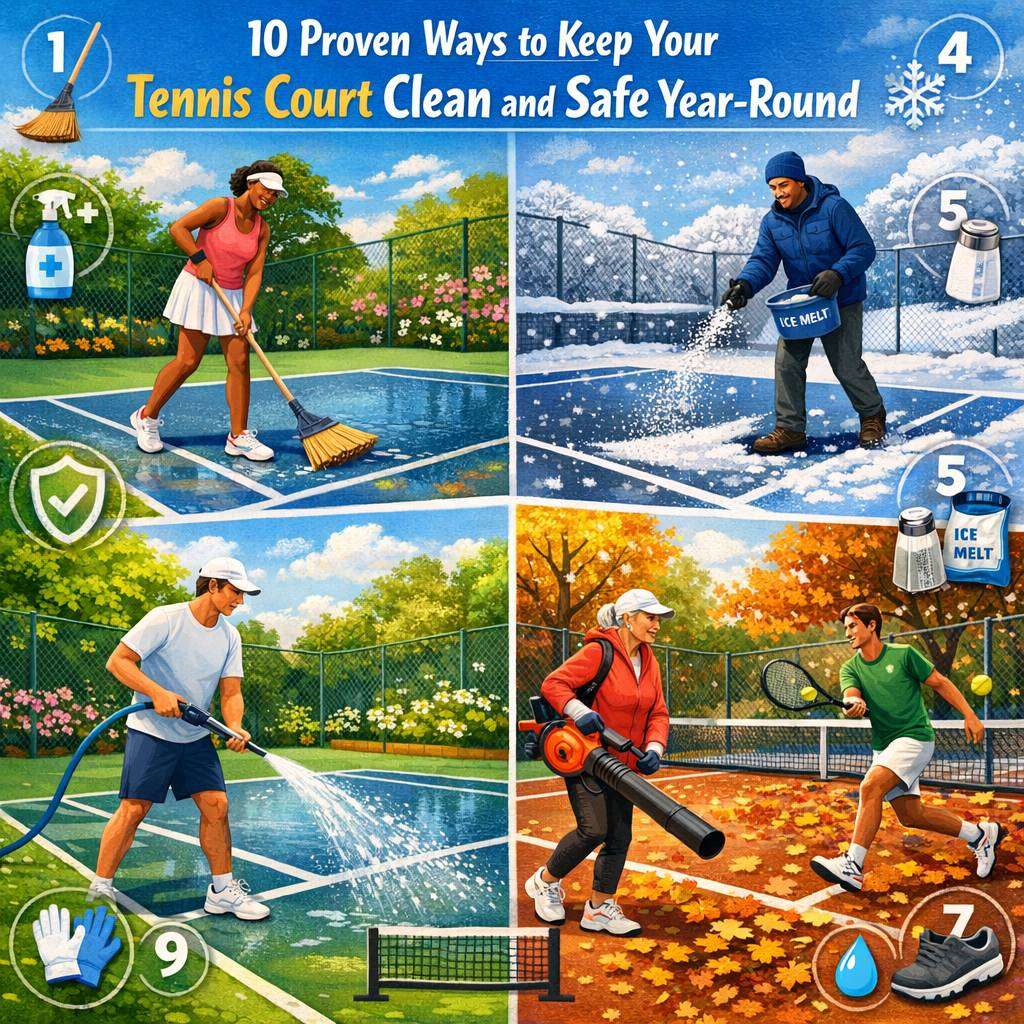
Maintaining a pristine tennis court isn’t just about aesthetics; it’s about performance, safety, and prolonging the life of your surface. As an expert in tennis facilities, I’ve found that a proactive, consistent approach saves money and keeps players happy. Below, you’ll find practical, proven methods to keep your court clean, well-maintained, and safe in all seasons.
FAQ: Tennis Court Cleaning
What is tennis court cleaning and why is it important?
Tennis court cleaning involves removing debris, dirt, algae, mold, and debris from the surface to maintain grip, prevent deterioration, and extend the court’s lifespan. Regular cleaning helps ensure consistent ball bounce, safety for players, and preserves the court’s appearance.
How often should a tennis court be cleaned?
- Outdoor hard courts: inspect weekly during play season; clean monthly or after heavy rainfall or storms.
- Outdoor clay courts: sweep daily during active seasons and perform deeper cleaning weekly.
- Indoor courts: clean weekly or as needed to remove dust and spills.Frequency depends on usage, climate, nearby vegetation, and weather events.
What tools do I need for basic tennis court cleaning?
- Soft-bristled push broom or sidewalk broom
- Leaf blower or air blower for loose debris
- Water hose with spray nozzle or pressure washer (on low setting)
- Mild detergent or court-safe cleaner (for hard courts)
- Soft scrubbing brushes for stains
- Squeegee or court squeegee (for water drainage on hard courts)
Can I use household cleaners on tennis courts?
Avoid household cleaners that can damage court coatings. Use cleaners specifically labeled for tennis courts or neutral pH cleaners. For painted or acrylic surfaces, use products recommended by the court manufacturer. Always rinse thoroughly after cleaning.
How do I clean a hard tennis court (acrylic or asphalt)?
- Remove loose debris with a broom or blower.
- Wet the surface lightly and apply a court-safe cleaner to stained areas.
- Scrub stains with a soft brush, then rinse with a gentle spray.
- Remove excess water with a squeegee and allow to dry completely before play.
- Inspect for surface wear and address any cracks or peeling edges.
How do I clean clay courts without damaging them?
Clay courts are sensitive to water and compaction:
- Sweep and remove loose debris daily.
- Light water use to settle dust, not flood the surface.
- Use a drag broom or grooming tool to level and redistribute the clay.
- Periodically roll the court to maintain uniform depth.
- Address any drainage issues to prevent waterlogging.
How should algae and mold be treated on outdoor courts?
- Improve drainage and sunlight exposure if possible.
- Use a court-safe anti-algae/mold cleaner following the product’s instructions.
- Scrub affected areas with a stiff brush and rinse thoroughly.
- Ensure the court dries completely before use to prevent resettling.
Are there eco-friendly cleaning options for tennis courts?
Yes. Look for biodegradable, pH-neutral cleaners labeled safe for sports surfaces. Use water-efficient methods, such as low-water washing or dry sweeping where appropriate. Reusable cleaning tools and proper disposal of runoff help minimise environmental impact.
When should a professional cleaning service be considered?
Consider professionals if:
- The court has extensive staining, surface damage, or algae growth that doesn’t respond to DIY cleaning.
- You need resurfacing or resurfacing advice.
- You require specialised equipment (e.g., high-pressure washing on delicate surfaces, court coating refinishing).
How can I prevent dirt and debris buildup between cleanings?
- Use covers or windbreak fencing to reduce leaf and dust entry.
- Keep nearby trees trimmed to minimise falling leaves.
- Sweep or rinse after heavy rain to prevent mud buildup.
- Schedule routine maintenance and address drainage issues promptly.
What safety precautions should I follow during cleaning?
- Wear gloves, eye protection, and non-slip footwear.
- Use non-abrasive brushes to avoid surface damage.
- Test cleaners on a small area first.
- Rinse products completely to prevent slippery residues.
How long does it take for a court cleaning to dry?
Drying time depends on surface type, temperature, humidity, and airflow. Outdoor courts may dry within 1–3 hours on a sunny, windy day; clay courts may take longer to settle and dry. Plan cleanings before peak play times to minimise downtime.
artificial grass tennis
Artificial grass tennis surfaces require regular care to stay level, firm, and playable. Start with a light roller or brush to keep fibres upright after rain or heavy use. Regular brushing helps prevent the formation of a slick surface and reduces the likelihood of divots. Consider routine grooming with a powered drag brush to distribute infill evenly, ensuring even ball bounce and trueness of play. In autumn, clear fallen leaves promptly to prevent bio-degradation and moss growth on any underlying shockpad.
tennis court repairs
Address minor repairs promptly to prevent escalation. Inspect the surface for hairline cracks, delamination, or edge breakdown after periods of freeze-thaw or heavy usage. Small repairs now—such as resealing joints, re-leveling low spots, or replacing damaged edging—can dramatically extend the life of your court and prevent larger, more costly problems later. Keep a log of repairs and schedule seasonal checks to identify issues before they affect safety.
tennis court artificial grass
For tennis court artificial grass, pay attention to infill levels and fibre wear. Check polymer or sand infill to ensure even distribution; uneven infill can cause irregular ball bounce and increased wear on specific zones. Refill as needed and use a dedicated infill rake to keep fibres upright. Regularly inspect drainage to prevent standing water, which not only undermines play but accelerates drainage system wear.
Keep your facility pristine with professional tennis court cleaning for optimum play. Regular maintenance prevents wear, improves traction, and extends surface life. For top-tier results, explore trusted tools and supplies to support consistent court cleanliness and safety: https://www.tenniscourtsupply.com/quick-scrub-tennis-shoe-cleaner.html
tennis court maintenance
A solid maintenance plan combines daily, weekly, and monthly tasks. Daily: sweep surface to remove debris and check for obstructions. Weekly: inspect nets, posts, and fencing; clean lines and remove moss or algae where present. Monthly: test drainage, check surface hardness, and perform a deeper clean. Seasonal tasks should align with climate: in autumn, clear leaves and debris; in winter, monitor for frost damage and ensure proper stability of edging; in spring, conduct a full inspection and refresh wear areas; in summer, focus on heat-related checks and surface drying times.
tennis grass court maintenance
Tennis grass court maintenance demands meticulous care similar to lawn management. Regular mowing at an appropriate height keeps the surface even and reduces moss. Aerate the surface to improve drainage and root structure of natural or hybrid grass. Apply appropriate fertilisers seasonally and monitor for pests or disease, treating promptly with recommended products. Use line markers that do not damage turf and ensure safe, non-slip footwear for players.
A pristine tennis court cleaning routine extends playability and safety, ensuring grip and bounce remain consistent. Regular debris removal, surface washing, and routine maintenance prevent staining and deterioration. For expert guidance and services, visit https://www.artificialgrassmaintenance.co.uk to learn about dedicated tennis court cleaning solutions.
tennis court installation
When planning tennis court installation, select a surface that matches use, climate, and budget. Artificial grass or synthetic surfaces may offer superior year-round usability with consistent ball bounce and lower maintenance than traditional options in certain environments. Ensure proper sub-base preparation, correct drainage, and high-quality edging to prevent edge lifting. A well-engineered installation can dramatically reduce ongoing maintenance needs and improve safety.
tennis court resurfacing
Tennis court resurfacing is essential when the surface shows significant wear, cracking, or fading lines. A professional resurfacing job restores bounce consistency, protects the sub-base, and extends the life of the court. Choose resurfacing materials appropriate to your existing base and intended use, and don’t neglect line repainting for visibility and compliance with governing body standards. Regular resurfacing intervals depend on usage and surface type, but a proactive schedule pays dividends over time.
tennis court cleaning
Regular cleaning is the backbone of safety and playability. Remove debris after each session, especially leaves, twigs, and pine needles that can conceal hazards or damage the surface. For artificial surfaces, use a soft-bristle brush or a powered cleaner to avoid fibre damage; rinse with water to remove dust and contaminants. Avoid high-pressure washing on delicate surfaces, which can degrade the surface primers and joints. Implement a seasonal deep clean to address algae, moss, or fungal growth, using appropriate, surface-safe cleaners.
safety tips to keep your court clean year-round
- Establish a daily sweep routine and a weekly deep clean schedule.
- Inspect fencing, net posts, and gates for stability and corrosion.
- Keep a debris calendar tied to leaf fall and weather events so you tackle clutter promptly.
- Use non-slip footwear and ensure surrounding walkways are free from obstructions.
- Maintain proper drainage to prevent puddles and slippery patches.
- Apply moss and algae inhibitors where appropriate, following product guidelines.
- Keep storage areas tidy with dedicated cleaning materials and tools to encourage routine use.
practical maintenance routine for busy clubs
- Morning checks: clear debris, inspect nets, and check lighting if applicable.
- Off-peak cleaning: perform a thorough surface clean, brush or vacuum artificial grass fibres, and inspect line markings.
- Monthly inspections: check for cracks, infill levels, drainage performance, and fencing integrity.
- Seasonal programme: align with weather patterns to maximise drying times and minimise disruption to play.
By adopting these strategies for artificial grass tennis, tennis court maintenance, and related services, you’ll keep your court clean and safe all year. Regular attention, prompt repairs, and a tailored maintenance calendar are the pillars of a durable, high-performance court that players can rely on—whether it’s a casual weekend game or a high-profile league match. If you’re planning upgrades, consider professional input on tennis court installation, tennis court resurfacing, and choosing the right materials to suit your climate and usage.