
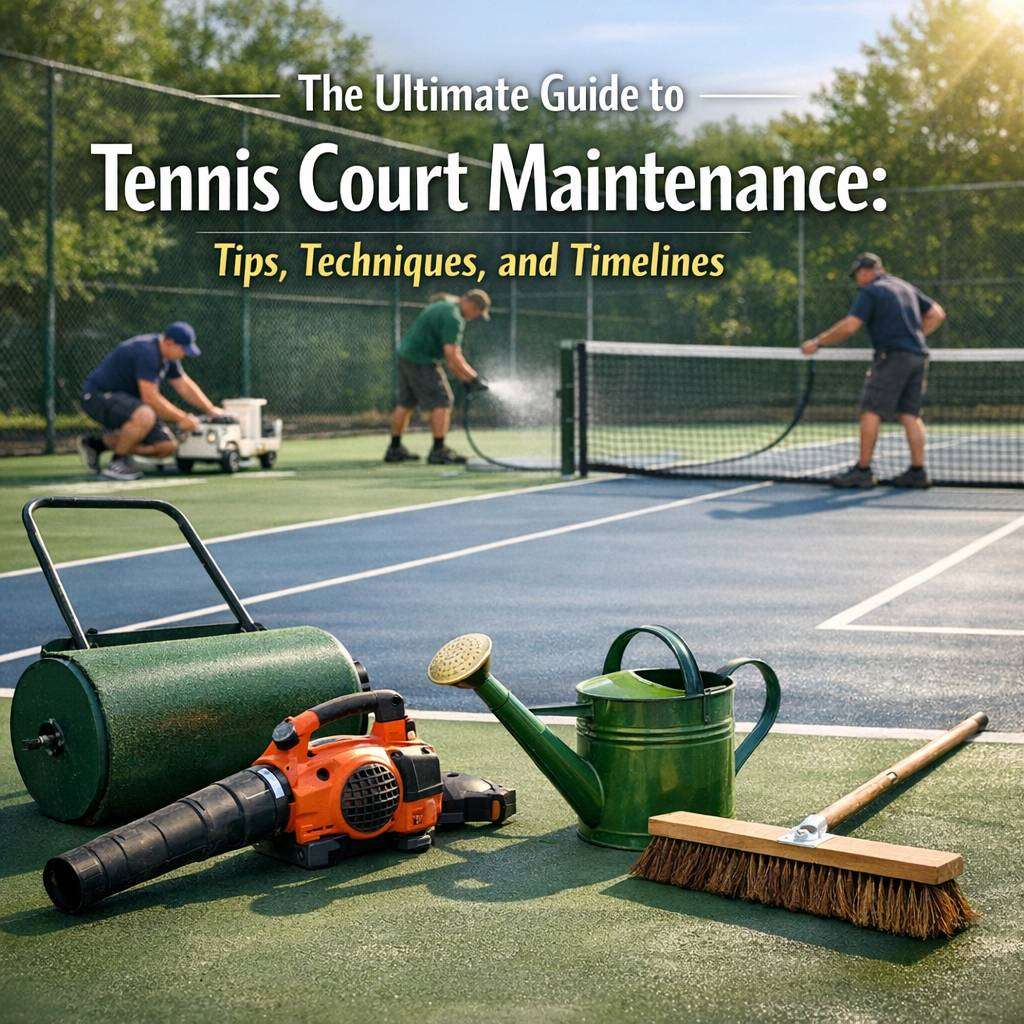
Tennis court maintenance is the unsung hero of every excellent match. A well-kept court not only prolongs the life of your surface but also enhances playability, safety, and the overall enjoyment of the game. In this guide, we’ll walk you through practical strategies, scheduling ideas, and best practices to keep your court looking and performing at its best.
As a tennis facility manager or enthusiastic backyard player, understanding the nuances of artificial grass tennis courts, acrylic surfaces, and hybrid setups will help you make informed decisions. From daily cleaning routines to periodic resurfacing, the right maintenance plan translates into fewer repairs, lower long-term costs, and more consistent bounce and traction for players of all levels.
Tennis court maintenance is essential for lasting performance and player safety. Regular surface cleaning, line repainting, and crack repairs prevent deterioration and ensure consistent bounce. Seasonal inspections help identify wear patterns, drainage issues, and infill needs before problems worsen. Proper court maintenance extends your investment, reduces long-term costs, and keeps games enjoyable. For expert guidance and services, visit the resources below. artificialgrassmaintenance.co.uk/tennis-court-installation-resurfacing
Understanding surface types and their maintenance needs
Different court surfaces demand slightly different care regimes. An artificial grass tennis court, for instance, relies on evenly distributed fibres and a stable infill to maintain its play characteristics. Regular tennis court cleaning — removing debris, leaves, and pet waste — prevents matting and moss growth that can dull ball response and cause uneven bounces. For traditional hard courts, brush and wash routines help control dust and surface slickness after wet weather. If your facility uses a tennis grass court maintenance approach, you’ll prioritise grooming the turf to preserve fibre alignment and ensure proper drainage during rainfall.
Daily and weekly routines
A practical maintenance plan starts with simple daily checks. Inspect for litter, stray leaves, and animal waste. Use a soft-bristled brush or a low-pressure cleaner to lift debris from the surface without damaging fibres or the infill. Regular grooming of artificial grass tennis helps keep bi-directional fibre orientation balanced, which supports even play. On weekly cycles, perform a more thorough tennis court cleaning: sweep the surface, rinse where appropriate, and spot-clean any stains or moss patches that may have formed in shade-drenched corners. After heavy rain, it’s wise to remove puddles and allow the court to dry completely before heavy use to avoid surface damage.
Seasonal maintenance and inspections
Seasonal checks are essential to catch issues before they escalate. In spring, evaluate drainage performance and check for wear at high-traffic lines. In autumn, clear fallen leaves promptly to prevent dead patches and algae growth in damp conditions. Summer invites more frequent sunscreen and pollen deposition, which can mask surface grime; a deeper clean every few weeks may be warranted for some venues. For every season, inspect net posts, anchors, and fencing for stability. Tighten nets and replace worn hardware to maintain safe and consistent play.
Tennis court maintenance for artificial grass tennis courts
Artificial grass tennis court maintenance centres on fibre integrity and infill balance. Regular brushing realigns fibres, prevents matting, and helps distribute infill evenly for predictable ball bounce. Address low spots or irregularities that can affect drainage and turf uniformity. Periodic cleaning with a mild detergent solution helps remove oil and scuff marks without damaging the fibres. If you notice excessive seedling growth or moss, treat promptly with a recommended fungicide or cleaning solution suitable for artificial grass.
For cleaning, avoid high-pressure washing that can dislodge infill or fray the turf. Instead, use a gentle sweep or a low-pressure sprayer. If your surface uses a sprayed acrylic layer or a hybrid composition, ensure cleaning methods preserve the integrity of the top layer and do not strip colour or gloss unintentionally. Budget for a professional assessment every few years to verify infill levels and fibre wear, and plan tennis court resurfacing when necessary to restore play characteristics.
FAQ: Tennis Court Maintenance
What is tennis court maintenance and why is it important?
Tennis court maintenance refers to the regular care and upkeep of a tennis court to preserve its playing surface, safety, and longevity. Proper maintenance helps prevent damage, ensures consistent ball bounce, reduces the risk of injuries, and extends the life of the court.
How often should a tennis court be inspected?
Inspect the court at least once a week during peak playing seasons and after major weather events (heavy rain, frost, or freeze-thaw cycles). More frequent inspections may be needed for high-use facilities.
What are the common types of tennis court surfaces, and how do maintenance needs differ?
- Asphalt or concrete hard courts: Require line repainting, crack sealing, resurfacing every 8–12 years, and routine cleaning.
- Acrylic or cushioned hard courts: Similar to hard courts but may need more frequent resurfacing due to surface wear and consistent coating maintenance.
- Clay courts: Require daily brushing, rolling, and grooming; regular top-ups of court materials; more frequent line maintenance.
- Grass or artificial turf courts: Need brushing, infill maintenance, weed control, and proper irrigation management.Maintenance schedules vary by surface; follow manufacturer guidelines and local climate considerations.
What daily tasks should be part of routine tennis court maintenance?
- Clear debris (leaves, sticks) from the surface and surrounding area.
- Check for standing water and proper drainage.
- Inspect for cracks or damage and address them promptly.
- Clean lines and repaint as needed.
- Ensure net posts and net tension are correct.
How do weather conditions affect tennis court maintenance?
- Rain and humidity can cause pooling, moss, or algae growth on surfaces.
- Freeze-thaw cycles can cause cracks in pavement.
- Sun exposure can lead to surface fading and accelerated wear.Plan maintenance tasks around weather: clear after rain, monitor for moisture, and perform resurfacing or sealing as recommended by manufacturers.
What are the signs that a tennis court needs resurfacing?
- Cracks that are widening or patching repeatedly.
- Uneven texture or soft spots, indicating structural damage.
- Significant colour fading or coating wear.
- Frequent maintenance issues with ball bounce or line integrity.Resurfacing timelines depend on surface type, usage, and climate.
How do I repair cracks and surface damage?
- Small cracks: Clean, fill with a compatible crack filler, and seal.
- Larger cracks: Professional assessment recommended; may require resurfacing or patch repairs.
- Surface wear: Recoat or resurface per manufacturer guidelines.Always follow the court’s specific repair instructions and consult a professional for extensive damage.
What maintenance is required for line painting?
- Repaint lines when they become faint or faded.
- Use weather-resistant, court-approved line paint.
- Ensure lines are straight and clearly delineated to avoid disputes during play.
- Schedule repainting during cooler parts of the day to prevent paint from drying too quickly.
How should court cleaning be performed?
- Use a soft-bristle leaf blower or broom to remove loose debris.
- For hard courts, use a mild detergent diluted in water for cleaning; avoid harsh chemicals.
- Rinse thoroughly with water; allow to dry completely before playing.
- Avoid pressure washing that can damage surface coatings or crack seams.
What are best practices for drainage to prevent water damage?
- Keep gutters and drainage systems clear.
- Ensure proper grading around the court to direct water away.
- Repair or replace damaged drainage components promptly.
- Consider installing a permeable surface or drainage mats if applicable.
How often should a professional inspect or service a court?
Professional inspections are recommended annually or after significant weather events or damage. Consider scheduling periodic resurfacing, crack repair, or coating refreshes with a qualified court contractor.
How can I extend the life of my tennis court?
- Regular cleaning and debris removal.
- Timely crack sealing and minor repairs.
- Periodic resurfacing or recoating according to surface type.
- Proper irrigation and drainage management.
- Winterizing or seasonal maintenance where applicable to prevent damage in cold climates.
How much does tennis court maintenance typically cost?
Costs vary by surface type, condition, and geographic location. Routine maintenance like cleaning and minor repairs is relatively affordable, while resurfacing or major repairs can be a larger investment. Obtain multiple quotes from qualified court contractors for an accurate estimate.
Are there eco-friendly maintenance options?
Yes. Use water-efficient cleaning methods, biodegradable cleaners, eco-friendly sealants and paints, and strategies to minimise chemical runoff. Consider energy-efficient lighting and rainwater harvesting for site maintenance where feasible.
How do I choose a maintenance contractor for my tennis court?
- Check licenses and certifications.
- Review references and prior project examples.
- Confirm warranties and service guarantees.
- Compare detailed scope of work and timelines.
- Verify safety practices and insurance coverage.
What should be included in a maintenance plan or schedule?
- Regular cleaning and debris removal.
- Routine inspections and defect tracking.
- Seasonal tasks (line repainting, sealing, crack repair).
- Drainage checks and weather-related precautions.
- Budget and replacement timelines for resurfacing or coatings.
If you’d like, I can tailor this FAQ to a specific court surface (e.g., hard court, clay court) or provide a printable maintenance calendar.
Tennis court resurfacing and surface refresh cycles
Tennis court resurfacing is a major undertaking but a worthwhile investment when the surface shows excessive wear, cracking, or significant loss of bounce and grip. The resurfacing timeline depends on usage levels, maintenance quality, and surface type. For artificial grass tennis court surfaces, consider resurfacing when infill has degraded beyond efficiency, or fibre orientation is severely uneven. For hard courts, resurfacing every 8–12 years is common in many settings, with a planned maintenance window to minimise disruption to players. During resurfacing, you’ll generally re-profile the substrate, reapply the topcoat or acrylic layer, and reinstall lines with precision. After resurfacing, a dedicated period of curing before reopening for play ensures the surface achieves optimal hardness and slip resistance.
Tennis court installation and long-term planning
When planning tennis court installation, select a surface that aligns with your climate, budget, and intended use. Artificial grass tennis courts offer comfortable play and resilience in various weather conditions, while traditional hard courts deliver consistent bounce and durability. Consult with reputable installers who can provide a comprehensive maintenance plan, including recommended cleaning products, grooming equipment, and a staged resurfacing schedule. A well-structured maintenance agreement reduces downtime and ensures your court remains in top condition across seasons.
Cleaning products, equipment, and best practices
Choose cleaning agents that are gentle on your surface and effective at removing contaminants without causing harm. For artificial grass tennis or tennis grass court maintenance, use soft brushes, squeegees, and appropriate infill maintenance tools. Avoid aggressive cleaners that can degrade fibres or the base layers. For drainage-focused maintenance, inspect and clear channels and ensure infill remains evenly distributed post-cleaning. Timely removal of debris, moss, and algae keeps the surface safe and ensures consistent ball bounce. Regularly check a maintenance log or digital record to track cleaning frequency, repairs, and resurfacing milestones.
Scheduling and personnel considerations
A practical maintenance plan balances routine tasks with periodic improvements. Designate responsible staff or contractors for daily debris removal, weekly grooming, and seasonal inspections. Create a calendar that marks essential milestones: daily cleaning, weekly grooming, quarterly inspections, seasonal drainage checks, and planned resurfacing windows. Keep a reserve budget for unexpected repairs or urgent sanitisation after severe weather events. Sharing responsibilities with a clear maintenance protocol reduces downtime and extends the life of your tennis court artificial grass or other surfaces.
If you’d like, I can tailor a maintenance calendar aligned with your court type, usage, and local climate.
Tennis court maintenance requires regular inspection, cleaning, and proactive repairs to preserve surface playability and safety. Consistent upkeep extends court life, reduces hazards, and sustains value for facilities and enthusiasts alike. Learn more about tools here: https://hartru.com/products/4-foot-aussie-clean-sweep